
NEWS
King Charles to lead remembrance silence Sunday at the Cenotaph in Whitehall, London as thousands prepare to honour britains fallen heros.

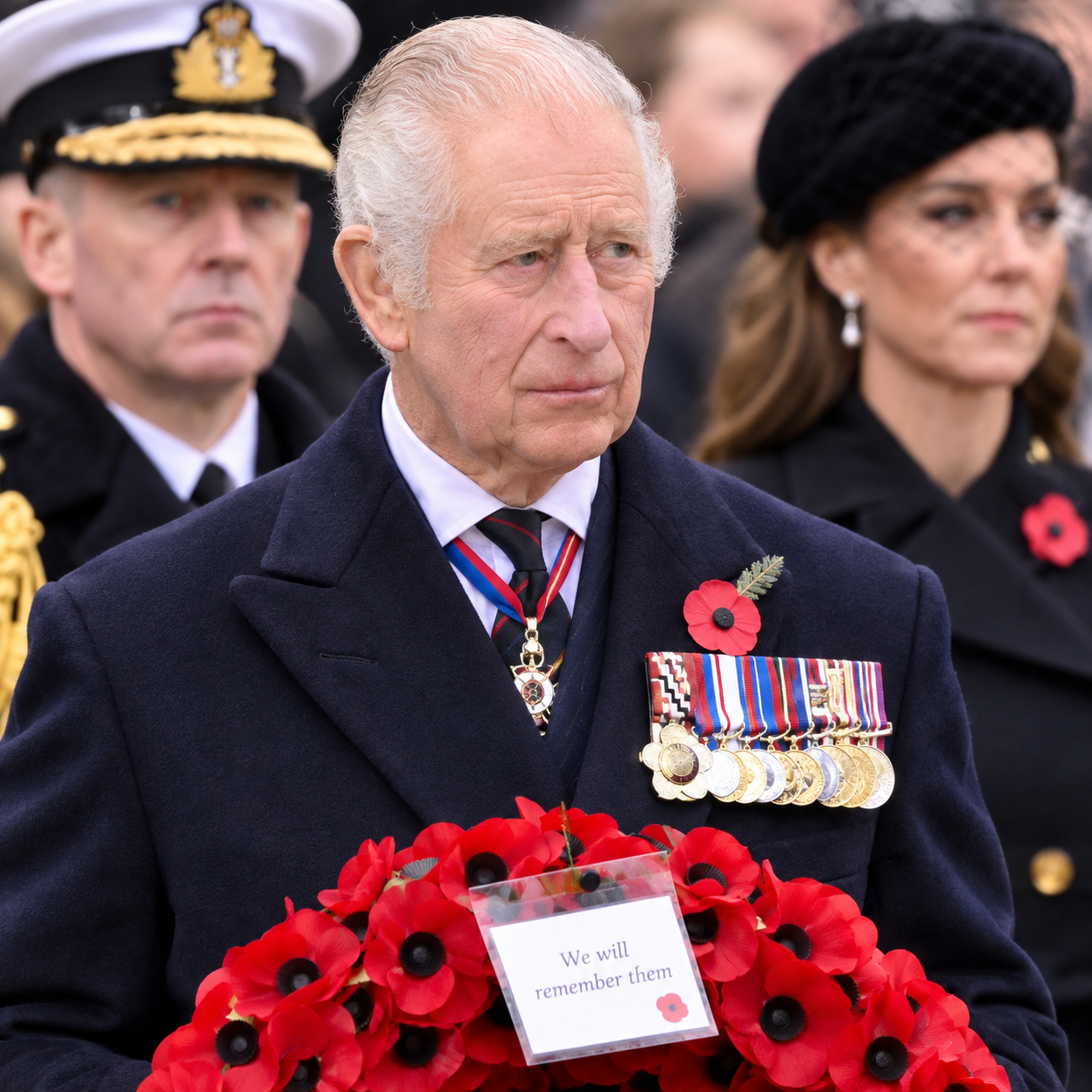
A deeply emotional moment is approaching for the British Royal Family as King Charles prepares to lead the nation in its annual Remembrance Sunday commemorations. With thousands expected to gather in central London, all eyes will turn towards the monarch as Britain pauses to honour those who made the ultimate sacrifice in service to their country.
It is one of the most significant dates on the royal calendar, and this year’s ceremony promises to carry a powerful message of remembrance, gratitude and national unity.
But beyond the familiar royal appearances, military uniforms and traditional wreath-laying ceremony lies a much deeper story — one of courage, sacrifice, families left behind and generations who continue to remember.
ALL EYES ON KING CHARLES AT THE CENOTAPH
King Charles is set to lead the National Service of Remembrance at the Cenotaph in Whitehall, London, on Sunday, November 8, 2026.
The annual ceremony brings together members of the Royal Family, senior government officials, military representatives, veterans and members of the public.
At the heart of the occasion will be the national two-minute silence at 11 a.m., a moment when the country comes together to remember those who lost their lives in the First World War, the Second World War and subsequent conflicts.
For King Charles, the occasion represents an important part of his responsibilities as monarch.
As head of state, his presence at the Cenotaph reflects the Crown’s longstanding connection with Britain’s Armed Forces and the nation’s history of remembrance.
The monarch will be joined by Queen Camilla and other senior members of the Royal Family, alongside political leaders and representatives from different communities.
It is a ceremony that reminds the country that remembrance is not simply about looking back at history. It is also about recognising the sacrifices made by people whose courage helped shape the freedoms enjoyed today.
10,000 VETERANS EXPECTED TO TAKE PART
One of the most moving parts of this year’s commemorations will be the Royal British Legion’s traditional March Past.
Approximately 10,000 veterans are expected to participate, representing more than 300 Armed Forces and civilian organisations.
The participants will include military veterans, serving personnel, cadets, bereaved children and representatives of organisations connected to Britain’s wartime history.
Among those expected to take part are people from different generations, including some of the last surviving veterans of the Second World War.
Their presence offers a powerful reminder that the history being remembered is not simply something written in textbooks.
For many families, the consequences of war remain deeply personal.
Some participants will be remembering parents, grandparents, siblings, friends and colleagues who never returned home.
Others will be paying tribute to people who survived conflict but continued to carry its emotional consequences long after their military service ended.
The sight of thousands marching together is expected to provide one of the most significant moments of the day.
WHY THE TWO-MINUTE SILENCE MATTERS
At precisely 11 a.m., the nation will observe its traditional two-minute silence.
The silence is marked by the firing of guns from the King’s Troop Royal Horse Artillery on Horse Guards Parade.
Following the silence, the Last Post will sound before wreaths are laid at the Cenotaph.
Although the moment lasts only two minutes, its meaning reaches far beyond the time spent standing quietly.
It represents an opportunity for people to reflect on the human cost of conflict and remember those who sacrificed their lives.
Across Britain, communities will also gather at local memorials, churches and public spaces to observe the occasion.
For some, it will be a family tradition passed down through generations. For younger people, it will be an opportunity to learn about the experiences of those who came before them.
The message remains the same: their sacrifices should never be forgotten.
A YEAR OF REMEMBERING DIFFERENT GENERATIONS
This year’s commemorations also recognise the experiences of veterans who served in more recent conflicts, including Bosnia, the Iraq War and the First Gulf War.
The Royal British Legion has highlighted the importance of remembering not only those who died but also the families and individuals whose lives were changed by military service.
Among those sharing their experiences is RAF veteran Steve Hooper, who served as a mechanical transport driver during the Iraq War.
He has spoken about the challenges he experienced after returning home and the support he received through the Royal British Legion and the Invictus Games.
His experience highlights an important part of remembrance that can sometimes be overlooked.
The impact of conflict does not necessarily end when military personnel return home.
Families, partners and children can also experience the lasting effects of military service, making continued support for veterans an important part of the national conversation.
THE ROYAL FAMILY’S ROLE IN THE COMMEMORATION
The presence of King Charles and senior members of the Royal Family gives the occasion a strong sense of continuity.
For generations, British monarchs have participated in national acts of remembrance, recognising the Armed Forces and honouring those who served.
The Prince and Princess of Wales are also expected to join the commemorations.
Their attendance reflects the importance of ensuring that remembrance continues to be recognised by younger generations.
While royal appearances often attract attention because of clothing, public engagements and family developments, Remembrance Sunday carries a different significance.
The focus is not on fashion or royal headlines. It is on the people whose service and sacrifice deserve recognition.
For the Royal Family, standing alongside veterans and bereaved families is an important public expression of gratitude.
A MOMENT THAT GOES BEYOND ROYAL TRADITION
What makes Remembrance Sunday particularly meaningful is the way it brings people together.
Political differences, personal backgrounds and social divisions are set aside as the nation pauses to remember a shared history.
The ceremony also provides an opportunity to recognise those who continue to serve in the Armed Forces today.
According to the government, approximately 6,500 UK Armed Forces personnel will remain deployed on operations and at overseas bases while the country observes Remembrance Sunday.
Their continued service is another reason the occasion remains relevant.
It is a reminder that the responsibility of protecting others is not confined to the past.
As King Charles prepares to lead the national silence, the message will extend beyond the walls of the Cenotaph and reach people watching from homes, communities and countries around the world.
THE MESSAGE BRITAIN MUST NEVER FORGET
Ultimately, Remembrance Sunday is about more than a ceremony attended by the monarch.
It is about remembering ordinary people who found themselves in extraordinary circumstances.
It is about recognising the families who endured years of uncertainty, the veterans who returned home and the generations who continue to preserve their stories.
It is also about teaching younger generations why remembrance matters and why the sacrifices of the past should never be taken for granted.
As thousands prepare to gather at Whitehall, King Charles will once again stand at the centre of one of Britain’s most meaningful national traditions.
The two-minute silence may be brief, but its message is intended to last forever.
Lest we forget.
WHAT DO YOU THINK?
Do you believe Remembrance Sunday remains one of the most important traditions in the British Royal Family’s calendar?
And do you think younger generations are doing enough to preserve the stories and sacrifices of Britain’s war veterans?
Share your thoughts in the comments below.
Don’t forget to LIKE, SHARE and FOLLOW our page for more royal family news, royal engagements and the latest updates from King Charles, Queen Camilla, Prince William and Princess Catherine.

jaden smith really fell in love with michèle lamy, who’s already 82, he says that one night changed his life now they’ve been spotted walking arm in arm in paris again….

🚨 Meghan Markle Faces Fresh Controversy As Viral Photos Spark New Speculation About Archie And Lilibet’s Biological Mother. The little girl looks like her biological mother this woman…..

🚨 SHOCKING EPSTEIN FILES: Court Documents Allegedly Reveal That Jeffrey Epstein Recorded Secret Sex Tapes Involving Prince Andrew, Donald Trump, Bill Clinton and Richard Branson — New Questions Emerge!

HORRIFYING! EPSTEIN’S ZORRO RANCH SCANDAL DEEPENS — EXPLOSIVE VICTIM TESTIMONIES, UNANSWERED QUESTIONS ABOUT MISSING EVIDENCE & CHILLING ALLEGATIONS OF SECRET MEDICAL EXPERIMENTS IN A LIVING NIGHTMARE THREATEN TO EXPOSE ONE OF THE DARKEST CHAPTERS OF THE EPSTEIN SCANDAL. THESE PEOPLE TREATED HUMANS LIKE LIVESTOCK FOR THEIR EXPERIMENT…

WATCH VIDEO: BREAKING:Pete Hegseth’s downfall begins: Articles of impeachment have officially been filed against Pete Hegseth.’Stubborn’ defense secretary believes God wants him to run the Pentagon… but insiders holding a lethal dossier of secrets are ‘giddy’ with excitement as his path to destruction is revealed

48 years old Serena Williams has announced engagement to her 26 year old girlfriend says she’s done with men

WATCH VIDEO: Prince Harry Furious Finger-Pointing and “Participation Medals” at Quiet Remembrance Service Draw Mockery as Locals Appear to Ignore Him

So Disgusting Prince William, 44, spotted kissing mysterious woman, 28, during an intimate and romantic UK vacation without wife Kate Middleton, 44, as her frequent hospital visits raise fresh concerns about her health, but one shocking detail in the photo raises big questions

🚨💔 10 MINUTES AGO: BUCKINGHAM PALACE ANNOUNCES HEARTBREAKING ROYAL News! Prince William Stands Beside a Tearful Kate as She Breaks Down and Says, “It Is With Our Deepest Sorrow That We Announce….

🚨 HARRY AND CHARLES’ SECRET RIFT EXPOSED. Royal Photographer Reveals the Moment He Was Warned Not to Show King Charles His Baby Photos — The Reason Left Him Stunned…

5 MINUTES AGO! Sirens tore through the night. The Palace gates slammed shut. Doors banged. Sophie and Edward burst in, faces pale. “Too late…” Edward rasped. Guards sealed the gates. Then Charles rose, voice choking: “Oh God… I’m sorry, I’m so sorry Harry… Harry has—” And in that instant, a chilling truth spread through the Palace: the future of the Crown… (For Full Information, Check Link In Comment👇🏻
